
From research to action, with the University of Bath
| 16 December 2025 | News
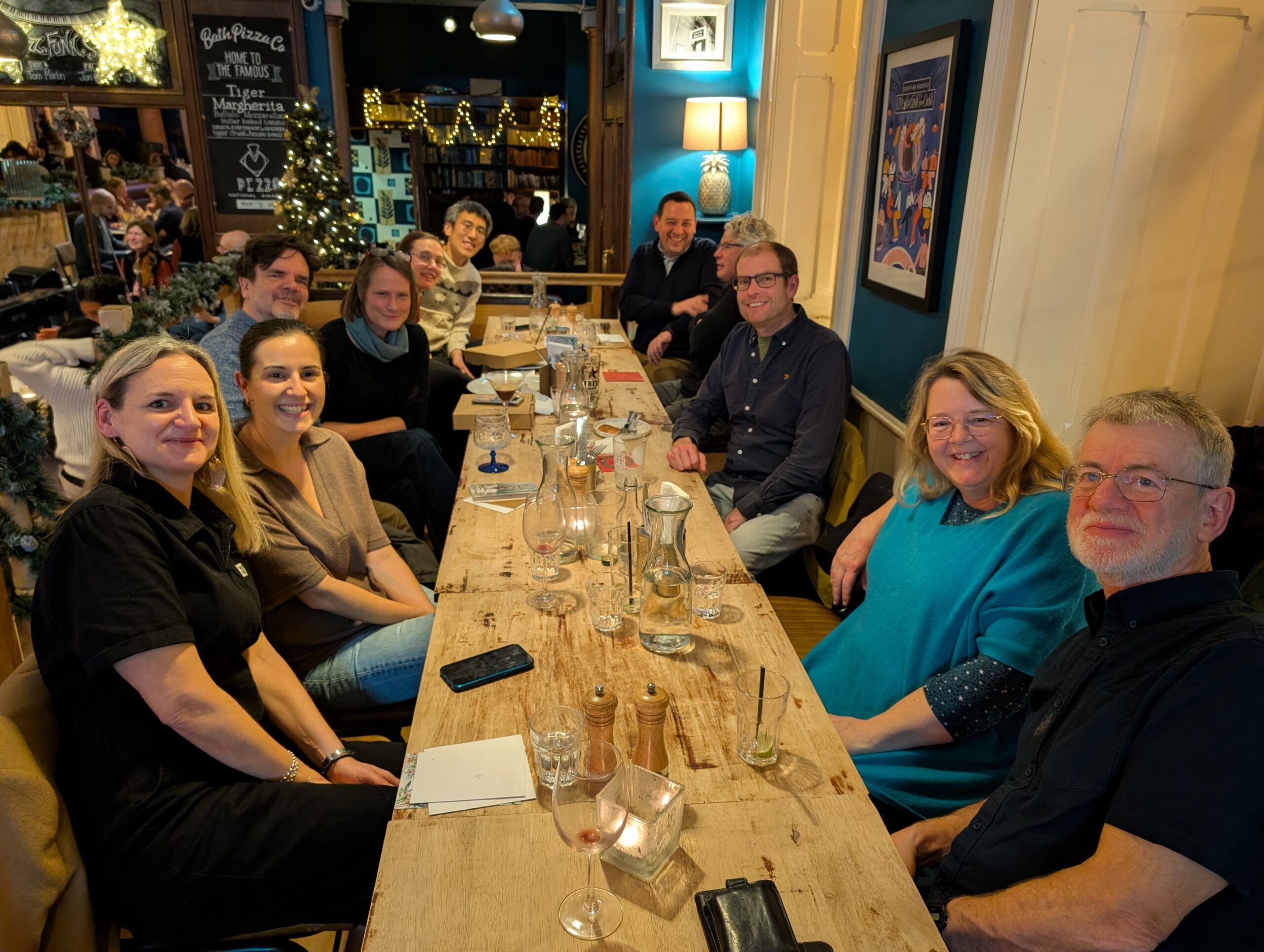
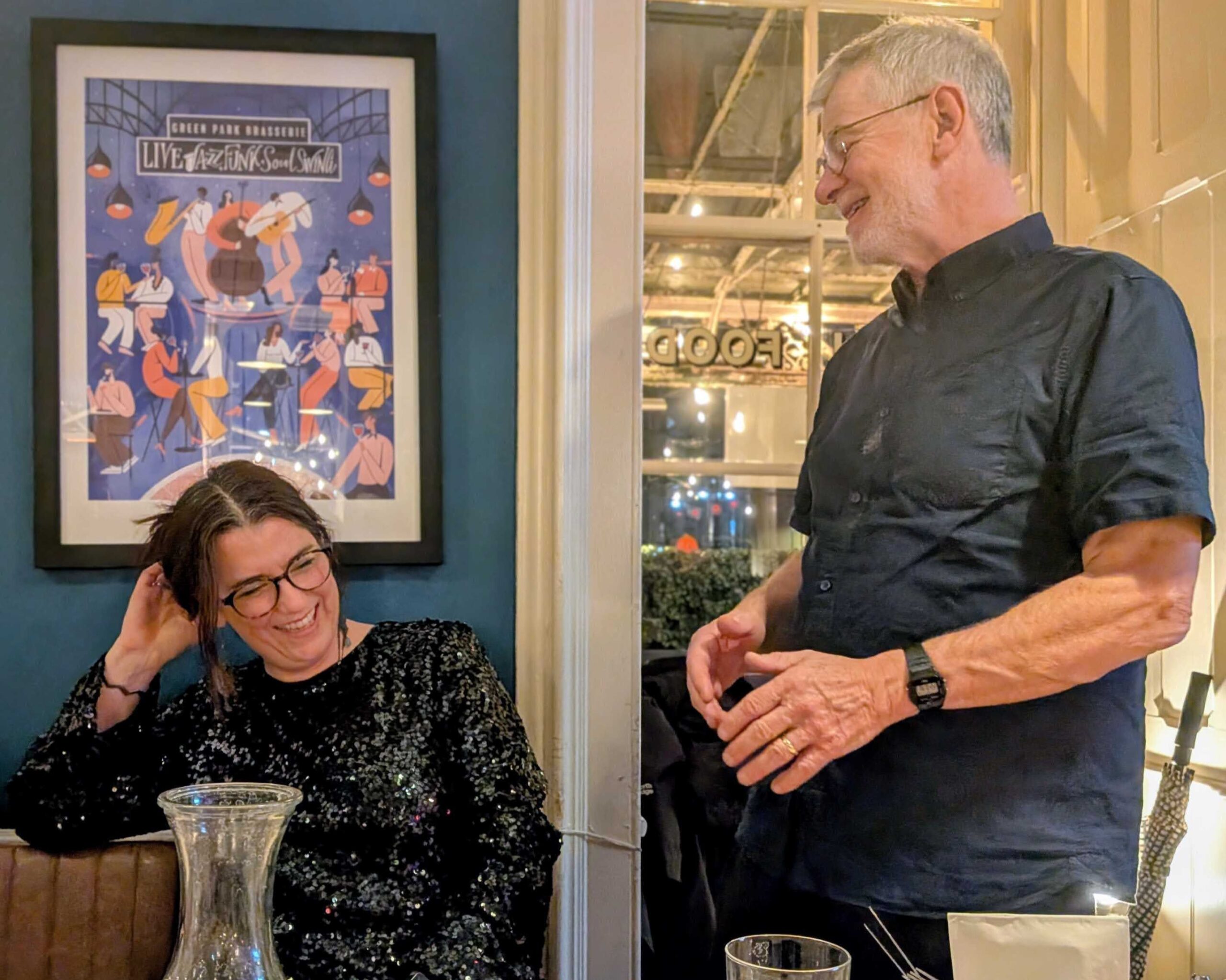
As Bath SDR celebrates its tenth anniversary, we have been looking back – at all the QuIP related work completed and all the people we have collaborated with – consultants and researchers, near and far. This blog focuses specifically on our special relationship with the University of Bath – recently celebrated with past and present collaborators – some photos at the end!
QuIP was born out of UK government funded research led by the University’s Centre for Development Studies between 2012 and 2015. The end of the funded research period was an opportunity for Fiona and James to reflect on how we could further increase our impact. Bath SDR was the outcome – a social enterprise self-funding learning by doing, ongoing action research, training and development of resources for others wanting to use the QuIP independently. While endorsed by the University, Bath SDR is entirely independent of it and has been financially self-sufficient. However, it has benefitted hugely from continued links with the University, and with networks of past and present staff and students. This special group of collaborators – student interns, consultants, staff, board members – have been key contributors to our work and this blog acknowledges this and shares some of their feedback about what the collaboration has meant to them. Five research professionals kindly gave us feedback, most via the interview app Qualia. Thank you to Michelle James, Max Nino-Zarazua, Kate Pincock, Luisa Enria, and Aurelie Larquemin.
Rigour in representation
A consistent theme was interest in learning and using a qualitative method that would be taken seriously in a data-driven sector, while still reflecting the complexity of social change and the lived experiences of respondents. Kate Pincock noted that “Rigour is something that qualitative research is sometimes accused of not being able to offer”. She found that QuIP allows researchers to explore not just if a programme worked, but how it interacted with the broader context of participants’ lives. “
The emphasis on change over time appealed to me because I think it’s important when exploring norms change, which is what I am interested in, to explore issues like reversals and stalling of change pathways, as well as spillover effects of interventions that can be traced back to specific programmes or ideas, and other attribution considerations, so that we are investing in and pursuing programmes which work beyond just the life cycle of the intervention itself.”
Michelle James, a Bath post-grad who first worked with us on evaluations for Tearfund, was also drawn to QuIP’s systematic approach – particularly use of causal coding in contrast to general thematic analysis – and to the human-centred approach, with every data point linked to a real human voice. Luisa Enria, a former Bath SDR board member and now Associate Professor at the London School of Hygiene and Tropical Medicine, echoed this sentiment from a global health perspective. Frustrated by the “limits of quantitative approaches” as a route to understanding health impacts, she saw QuIP as offering a “narrative approach to show causal links”, a critical step in a sector where impact is often narrowly defined by clinical outcomes rather than more holistic individual and community experiences. Aurelie Larquemin, who worked with us on the evaluation of a financial inclusion programme in Ghana, found that the causal maps were “not just illustrative, but real research outputs in their own right”. Max Nino-Zarazua worked with us in the early days, testing the appetite for QuIP among impact investors, preferring to rely on quantitative monitoring of outcome indicators. ”Some are pleased to know and to learn from the results. Others remain doubtful about the power of qualitative enquiry.” Whilst we have seen movement towards a much greater acceptance of mixed methods over the last decade, this is a challenge that we continue to face head on.
Influence on future work
Some of our consultants (as well as many other students who didn’t work with us but adopted QuIP as a research methodology) were in the midst of their PhD research, with QuIP providing useful experience and exposure to a different way of working with data. Michelle James used QuIP in her PhD to navigate the politically charged process of doing research with refugees and asylum seekers. The reflective and intuitive nature of the QuIP ‘back-chaining’ questions made it possible to train them as peer researchers rather than relying on ‘outsider’ interviewers, an approach we also adopted in another recent university-based evaluation). This approach not only helped to empower and involve the community she was working with but also yielded high quality data because the peer researchers could conduct interviews with people who they felt at ease with to discuss difficult issues. She also comments that “I’m sure I probably think more about causal pathways in all areas of my life now!”
Having worked remotely with Bath SDR and Participatory Development Associates in Ghana during the Covid-19 pandemic, Aurelie successfully adapted this remote data collection model for her own thesis:
“This experience had a tremendous impact on my PhD. Firstly, it showed me that remote data collection – when done in close collaboration with a national team of researchers – can work extremely well, provided there is sufficient discussion before, during, and after fieldwork. My QuIP experience also gave me strong arguments to secure approval from my university’s research and ethics committees, who had never validated such an approach for a social science PhD before. Secondly, I drew on the QuIP study design when shaping my own research – particularly in selecting the two cases and determining the number of in-depth interviews I needed (48). This gave me confidence that I would generate a sufficiently rich evidence base for a full thesis chapter… My research would have looked very different had I not crossed paths with Bath SDR and the QuIP methodology, which I continue to recommend in many of the evaluations I work on today.”
Max credited the experience of working with Bath SDR with helping to refine his professional focus on organisations that are truly ready to listen to the voices of marginalised ‘‘end-users’ or intended beneficiaries. Kate told us that she has become a “big advocate” of mixed methods work, using principles from QuIP to design studies that capture causal change pathways. Luisa continues to make the case for integrating participant voices into clinical trial designs and high stakes vaccination programmes.
“I have recommended using QuIP to several colleagues and I have had a couple of projects where… I felt that I could make the case for using qualitative and narrative approaches for understanding impact… I recently led a project that looked at the impact of community engagement for vaccination in humanitarian settings. I was able to show that how we understand ‘impact’ in this context is more complex and broader than simply seeing higher vaccine uptake. Our ethnographic research and focus on narrative through workshops helped us show that.”
It was very encouraging to read about the influence these experiences have had on some of our collaborators, alongside the role QuIP has played as a case study for hundreds of under- and post-graduate students as part of their study at Bath, and we hope that our work is helping to shape a generation of researchers who are more respectful of the relational and human dimensions of data collection and analysis, and confident of the value of multi and mixed methods research and evaluation. We are also incredibly grateful to the network of staff and students who have contributed to our learning together, providing us with a powerful mixture of thoughtful feedback and encouragement. We look forward to this close relationship between academia and applied research continuing to thrive, and are grateful to the University of Bath for recognising its value.
You can read more about our work here, and for more in-depth articles visit our Resources page.


Comments are closed here.